
Driving Change in Asset Recovery: What We Achieved in 2025
2025 was a year of both uncertainty and progress in the asset recovery field and beyond. Against a backdrop of shifting global priorities, funding challenges, and shrinking civic space, CiFAR delivered strong impact across the global asset recovery landscape.
As we launch our 2025 Annual Report, we’re proud to share how our work helped shape policies, strengthen transparency, and amplify civil society voices worldwide.
Shaping Global Standards and Ideas
In 2025, we pushed forward critical new thinking in asset recovery.
We launched four reports, including on victim inclusion, highlighting the human rights obligations of states and the importance of involving affected communities in asset return processes.
Research into illicit finance in the real estate sector opened new conversations in Kenya, identifying how corruption flows through global systems—and how to stop it.
Our Sanctions Watch platform also continued to grow, reaching 18,000 users, becoming a trusted resource for experts, researchers, and policymakers.
Driving Reform
We supported 19 civil society partners to advocate for legal and policy reform, helping translate global standards into national action.
One standout success was our CAPAR assessment methodology. Reports developed by partners in 2024 assessing the Common African Position on Asset Recovery, directly contributed in 2025 to:
The creation of a new asset recovery agency in Morocco
A new institutional partnership on asset recovery reform in Côte d’Ivoire
At the regional level, our advocacy ensured that civil society is now formally included in the African Union’s Asset Recovery Practitioners Forum—an important step toward more transparent and accountable processes.
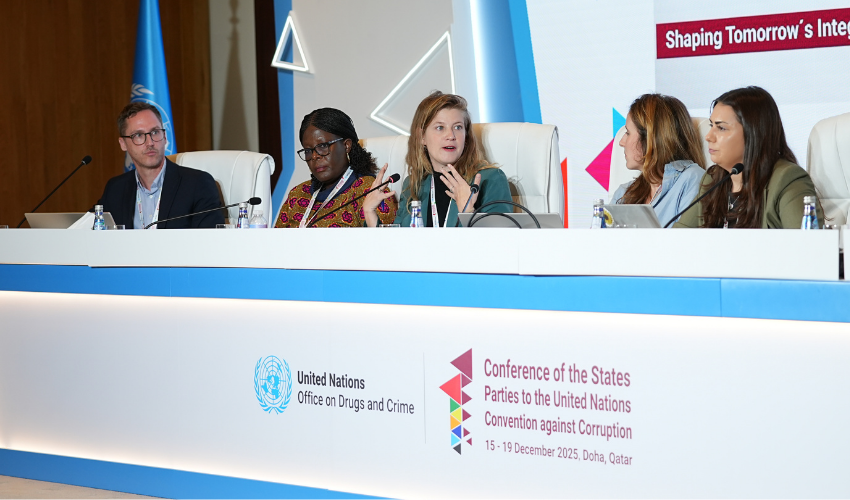
Globally, we influenced key policy discussions at forums including at the UNCAC Conference of States Parties, the G20, and the Financing for Development processes, ensuring that transparency, victim inclusion, and social reuse of assets remained on the agenda.
Putting Transparency on the Global Agenda
Transparency in asset recovery has long been limited but 2025 marked a turning point. Over the year we contributed to this by:
Co-leading global advocacy efforts to improve data publication
Working with governments to commit to greater openness around asset recovery data publication
This momentum led to six governments agreeing at the UNCAC CoSP to explore improved data publication, helping lay the groundwork for more accountable systems worldwide.
Strengthening Global Networks for Change
Asset recovery is inherently cross-border and so is our work. We don’t do this work in isolation and working with our partners and networks is essential for achieving meaningful change.
In 2025, we:
Supported international civil society case-based coalitions in Equatorial Guinea, Uzbekistan and Venezuela
Strengthened the CAPAR Civil Society Network and co-led the UNCAC Coalition Asset Recovery Working Group
Convened 10 CSO meetings in our Network
These networks are critical. They connect local expertise with global advocacy, ensuring that civil society can act collectively and effectively.
Our work in 2025 in numbers
4 | major reports published |
19 | civil society partners supported |
25+ | CSO professionals trained |
237 | women and youth trained through partners |
15 | jurisdictions assessed on transparency |
6 | governments committing to improved data practices |
Looking Ahead
2025 showed what’s possible when strong partnerships, evidence-based advocacy, and persistent engagement come together. As we move into 2026, we will build on this momentum to make asset recovery more transparent, inclusive, and effective for the people it is meant to serve.
👉 Read the full Annual Report to explore our work in detail and see how we’re driving change globally.
👉 Read our 2025 snapshot, giving the key figures for this year.
--
Photo: “Data Transparency in Asset Recovery and Return” by United Nations Office on Drugs and Crime, CC BY 4.0.