
The struggle to recover Jammeh’s assets
On 18 September 2026, the United States and The Gambia signed an agreement on the return of US$2,5 million from the sale of a property linked to former Gambia ruler Yahya Jammeh. Under the agreement, the funds will be used to compensate eligible victims of the Jammeh regime under The Gambia’s Victims Reparations Act, with the money transferred to the country’s Victims Reparation Fund.
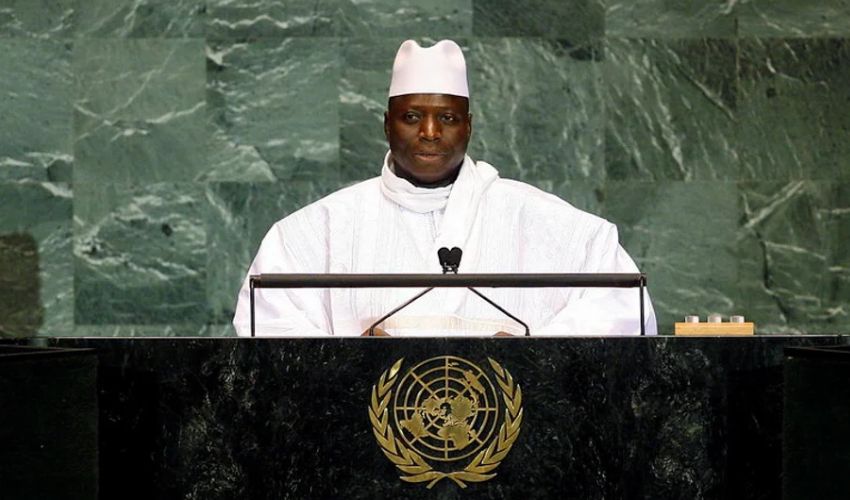
Photo/Erin Siegal, www.unmultimedia.org/photo
On 18 September 2026, the United States and The Gambia signed an agreement on the return of US$2,5 million from the sale of a property linked to former Gambia ruler Yahya Jammeh. Under the agreement, the funds will be used to compensate eligible victims of the Jammeh regime under The Gambia’s Victims Reparations Act, with the money transferred to the country’s Victims Reparation Fund. While the details on the return process and victim compensation mechanism remain to be clarified, this return marks a promising step in turning recovered Jammeh assets into a resource for citizens. It also shows how successful international cooperation can lead to meaningful recovery and victim compensation.
The struggle for the recovery of Jammeh’s assets and to bring justice to the thousands of victims of its brutal regime nevertheless continues.
Yahya Jammeh ruled The Gambia from 1994 to 2016. His regime was widely described as authoritarian and repressive. Thousands of people were subjected to harassment, arbitrary detention, torture, enforced disappearance and killing. The regime was also seen as largely corrupt. According to the Janneh Commission, mandated by the Gambia government, Jammeh and his cronies stole around USD 362 million from the state budget over its 22-year regime. Other estimates go up to USD 1 billion stolen assets according to OCCRP, which documented how state institutions, public revenues, and natural resources were systematically exploited for the benefit of Jammeh and his associates.
Only a small part of the assets have been recovered since Jammeh’s exile in 2017. Thousands of victims are still awaiting compensation for the violence and abuses they suffered.
A national struggle
The process to recover the Jammeh assets in Gambia has been marked by widespread criticism and serious allegations made both in conducting the recoveries and managing the recovered assets. The issue has become a key part of the broader effort to deliver justice to Gambian victims and strengthen transparency and accountability in the country’s institutions, attracting intense public attention and scrutiny.
In April 2025, an investigation of The Republic – conducted by a former trainee of CiFAR’s investigative journalism programmes – provided significant evidence that several Gambian officials and institutions handled the recovery of Jammeh’s assets in opaque and questionable ways. A few days later, thousands of Gambians went to the street to protest the lack of transparency and accountability in how the Jammeh assets were being sold. 27 persons and two journalists were arrested, while the civil society group Gambians against Looted Assets (GALA) denounced the “corrupt sales of the former President’s assets”. Allegations included that many assets “were sold at highly undervalued prices to connected individuals and friends”.
The protests were successful: some days later, the government released a list of seized assets linked to Jammeh with some details about the sales. One year later, a parliamentary commission mandated to look at the case published a 324 page report, highlighting numerous challenges and shortcomings in the recoveries and recommending follow up actions. Civil society has also continued to raise its voice to bring justice and transparency to the recovery of Jammeh’s assets.
So, what happened to the Jammeh’s assets and why are Gambians so enraged about them?
What are the Jammeh assets?
In its 2019 investigation, OCCRP documented that up to one billion dollars was stolen by Jammeh from the state-run telecoms and oil company, through illicit timber revenue, foreign aid, the central bank and pensions. Behind a cultivated image of generosity and benevolence, Jammeh maintained a lavish lifestyle in a luxurious palace: as found by The Republic (1,2,3), his personal and family assets included extensive real estate holdings, vehicles, tractors, livestock, aircraft and business interests accumulated during his 22 years in power. Outside The Gambia, the Janneh Commission identified properties in the US and Morocco, including the USD 3.5 million mansion in Maryland, which US authorities found had been stolen and which was forfeited in 2022.
A “travesty of justice”?
Recovering Jammeh’s assets has been a complex and controversial process from the very beginning. The process involved a range of institutions, often with overlapping or conflicting roles, and assets of very different kinds, located both in The Gambia and abroad.
The process started in 2017, shortly after Jammeh’s exile to Equatorial Guinea. As reported by The Republic the High Court Judge Amina Saho-Ceesay initially ordered the temporary freezing of some of the assets linked to Jammeh, including land properties, bank accounts, companies and livestock. An interim “receiver” of the assets was appointed to oversee the freezing process. As is common in such proceedings, the order was intended as a precautionary measure to prevent the assets from being transferred or disposed of while the authorities investigated the corruption allegations. The same year, President Adama Barrow established the so-called Janneh Commission, as regulated by rules on similar commissions in the 1997 Constitution. The Commission was tasked with examining Jammeh’s financial dealings, the conduct of public bodies and enterprises in their dealings with him, and the accumulation of assets by Jammeh, his family members and associates.
As The Republic investigation explains in detail, from its outset the process saw a dispute over who had legal authority to control and dispose of the assets. On one side, the High Court Judge Amina Saho-Ceesay had frozen the Jammeh-linked assets in 2017 and had appointed a court receiver, meaning that the assets remained under judicial supervision. On the other hand, the Executive, and in particular the then Attorney General and Justice Minister Abubacarr Tambadou seemingly tried to interfere with judicial decisions. According to the investigation, Tambadou aimed to replace the court-appointed receiver with a company – Alpha Kapital Advisory - whose owners were reported to have personal ties with Tambadou. Particularly, the company’s owner Alpha Barry, was reported to be a close friend of Tambadou, while Binta Sompo Ceesay— at the time Tambadou’s friend and later his wife—was alleged to have worked as a sales agent for Alpha Kapital. Tambadou denied both allegations. The former Attorney General also sought to release some of the frozen land before the final forfeiture decision. The application was rejected by Justice Amina Saho-Ceesay. While she was on vacation, however, another judge granted the application, intensifying the dispute.
In parallel, the Janneh Commission - a presidential commission of inquiry and therefore not itself a court issuing final judgments of ownership - became a central actor in facilitating the government’s response. The Commission submitted its findings in March 2019, recommending forfeiture and disposal of the assets. The government accepted those recommendations in its September 2019 White Paper. In its most controversial part, the document stated that following the recommendations, (…) “the said properties are hereby forfeited to the State.” The government argued that the High Court’s temporary freezing order and the interim receiver’s mandate had expired, allowing it to implement the Janneh Commission’s recommendations, including the appointment of the new receiver to manage the assets and confiscating them. High Judge Amina Saho-Ceesay, however, maintained that the assets remained under the Court’s supervision and could not be released without a judicial order, warning that a process without proper judicial proceedings could become “nothing short of a travesty of justice”.
A controversial sale
Following the government’s decision to declare the properties forfeited, the assets were managed and disposed of through different channels. In certain cases, involving third-party claims, former owners were given an opportunity to repurchase their properties, as explained by the former Attorney General himself in a response to the Republic investigation.
Most of the assets - hundreds of vehicles, tractors, aircraft, livestock and other movable assets - were auctioned or sold by different government bodies through the asset receiver, Alpha Kapital Advisory.
The Republic reported that these sales were often conducted with limited transparency, with questions over valuations, buyers, bidding procedures and the amounts ultimately recovered for the State.
For example, the government's own published records show vehicles selling below their stated reserve prices, including a Toyota Land Cruiser sold for D50,000 (about US$1,000) and a Hyundai sold for D10,000 (about US$200).
A particularly contentious example was the sale of Jammeh’s cattle in 2018: although another High Court Judge ordered its Sheriff to have the livestock independently valued in consultation with the Gambia Livestock Management Agency, the Agency said it was never involved in the valuation. The Sheriff subsequently sold 725 cattle for D8.3 million (about US$166,000)—much below the Janneh Commission’s valuation—with no independent valuation report found by The Republic.
The sale of Jammeh’s five remaining aircraft gives another example of the controversy surrounding the disposals. In 2018 and 2019, while the assets were still frozen and before the Janneh Commission had recommended their forfeiture, the Ministry of Finance sold the aircraft to a businessman for a combined US$740,000 (about D44.4 million), reportedly without competitive bidding and substantially below a 2018 valuation by a US company. The Government attributed the low sale prices partly to the aircraft’s poor condition.
Asset type | Type and quantity | Amount realised |
Vehicles | 458 vehicles | D44.3 million (~US$894,000) |
Tractors | 154 tractors | D13.1 million (~US$264,000) |
Livestock | 725 cattle | D8.3 million (~US$166,000) |
Aircraft | 5 aircraft | US$740,000 (~D37 million) |
Land/property | Fajara property | D3.15 million (~US$50,700) |
Sources: The Point and The Republic
Pressure for Accountability
Following The Republic investigation and the protests in May 2025, the National Assembly established a Special Select Committee to investigate the sale and disposal of assets identified by the Janneh Commission.
Its detailed report – formally adopted by the Assembly - identified significant institutional weaknesses in the way the assets were managed. Responsibilities were divided among several institutions, but their mandates were not always clearly defined, and the Committee found poor communication and limited coordination between agencies. It also highlighted weaknesses in record-keeping, with missing, incomplete and inconsistent documentation, making it difficult to establish the status of some assets, the basis for decisions taken and the destination of proceeds.
More broadly, the Committee found shortcomings in the systems for valuation of assets, supervision, financial control and oversight, as well as weaknesses in compliance with legal and court requirements. In its detailed analysis, the Committee illustrated these wider institutional problems through a range of different recovery instances.
In the cattle case, for example, the report found discrepancies in the records and difficulties reconciling the animals sold with the proceeds received. The examination of the recovery of five aircraft highlighted issues about their valuation, the documentation of their sale and the handling of the proceeds. The review of the role of Alpha Kapital as the asset receiver identified a substantial difference between funds received by the receiver and the amount transferred to the Central Bank.
According to the Committee, these weaknesses were not isolated problems with particular sales but reflected deficiencies in the systems and controls used to manage, document and dispose of recovered assets. The Committee therefore recommended further investigations where the available evidence warranted it.
Civil society’s response
Civil society organisations also raised serious concerns about the asset-disposal process and the accountability of those involved in it. Following the parliamentary inquiry, a group of organisations called for the findings concerning the management and sale of Jammeh’s assets to be fully investigated, including allegations of irregularities in the disposal process, and for officials or other actors to face investigation or prosecution where there is sufficient evidence.
In a joint position paper launched in August 2026, Gambian civil society also called for a broad set of reforms to address the weaknesses identified in the Parliamentary Committee’s report. They argued for a comprehensive new asset recovery and management law to clearly define the mandates of the institutions responsible for recovered assets, as well as arrangements for their custody, disposal, oversight and accountability. Civil society further called for prompt, independent and impartial investigations into individuals and institutions implicated in the Parliamentary Committee’s findings, with administrative, civil or criminal proceedings pursued where the evidence warranted them.
The civil society group further called for a nationwide forensic audit of Jammeh-era assets that have been recovered, managed, allocated or disposed of, alongside greater public disclosure of asset inventories, valuations, disposal records, beneficiaries and revenues. To increase transparency, they also proposed the creation of a verified national register of Jammeh’s assets, recording their status, ownership arrangements, disposal outcomes and revenues generated. Finally, they called for a structured mechanism to monitor implementation of the Parliamentary Committee’s recommendations, with clear deadlines, designated institutions, measurable benchmarks, stronger parliamentary oversight and regular public reporting.
The way ahead
The quest for the recovery of Jammeh’s assets continues to receive high attention on the political agenda and among citizens. Most recently, Gambian media reported that Vice-President Muhammed B.S. Jallow was scheduled to appear on 30 June 2026 to give the Government's response to the National Assembly report. He did not appear, and parliamentary sources reported that Government requested additional time to prepare a “comprehensive response.”
CiFAR is currently supporting its partner, Gambia Participates, to strengthen the voice of Gambian civil society in promoting transparent, accountable and participatory asset recovery. The initiative aims to advance urgent asset recovery reforms in The Gambia through the implementation of the African Union’s Common Africa Position on Asset Recovery (CAPAR).
As civil society and citizens await a substantive government response, the US–Gambia agreement announced in September 2026 offers tentative promise for what asset recovery can achieve. If implemented transparently and accountably, it may show how asset recovery has the potential to deliver tangible benefits to victims. The same can be applied domestically: with strong transparency and accountability, asset recovery can become more than the return of stolen wealth—it can be a pathway to justice, rebuilding trust and putting recovered resources back in the hands of those who were harmed.