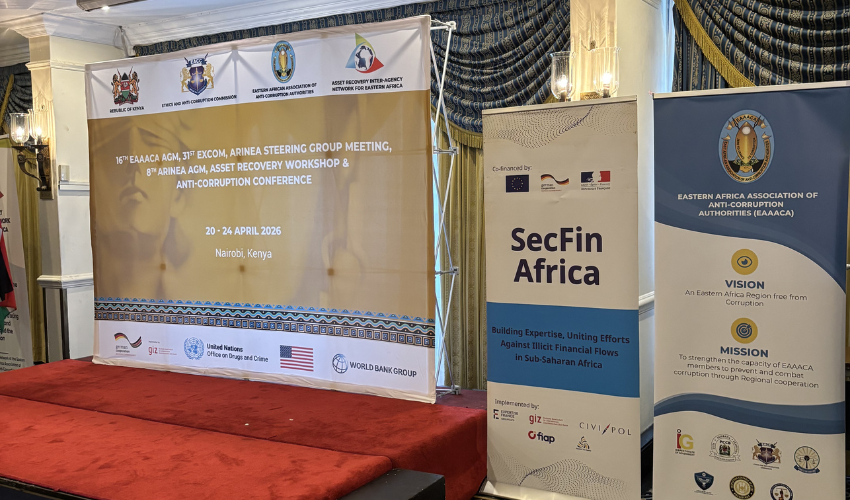
How can civil society, law enforcement and public oversight bodies collaborate for effective prevention of illicit financial flows and the recovery of stolen assets? This was the topic of discussions we had this week in Nairobi, Kenya.
This paper looks at the challenges the ecosystem faces in addressing illicit finance. Illicit finance continues to pose a significant threat to the integrity of Kenya’s real estate sector. Although Kenya has addressed gaps in its anti-money laundering and countering the financing of terrorism (AML/CFT) laws and deficiencies identified in the 2022 Eastern and Southern Africa Anti-Money Laundering Group (ESAAMLG) Mutual Evaluation, the system still struggles in practice.
In this blog post, we dive into how the real estate ecosystem operates for different kinds of transactions, looking at the different actors who could or should be involved in different types of property or land sales and the ways in which the ecosystem should act to prevent money laundering. The purpose here is not to identify explicitly where failings could be happening – rather it is to set out process, to assist interested parties to understand how actors interact with each other.
Our report describes the key architecture current to 2025 that operates to prevent money laundering in the real estate sector in Kenya. It discusses the major players across five different categories of actors, the ways they work and the challenges they face. In doing so, it lays out the network that seeks to prevent and address money laundering into real estate in Kenya, as well as those actors seeking to introduce illicit finance into the sector or make it easier to do so.
This paper explores AML/CFT controls relevant to the real estate sector after three years of revision since the 2022 assessment. It outlines the supervisory roles and reporting obligations that apply to buyers, sellers and key intermediaries in real estate transactions.
Page 1 of 1