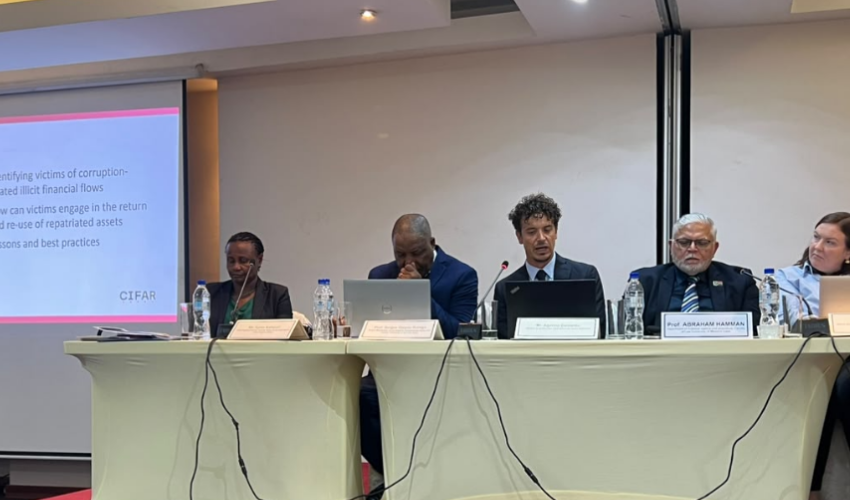
In June, we joined civil society organisations and other stakeholders in Geneva at the Office of the High Commissioner for Human Rights’ (OHCHR) expert meeting on strengthening international cooperation for the repatriation of funds of illicit origin and their use for the realization of human rights. We left that discussion with a clear message: asset recovery is not only about where stolen money goes, but also about who has been harmed and who gets a say in what happens next.
This research paper describes the human rights obligations States have with respect to victim participation in asset recovery processes, from confiscation all the way through to return.
As we step into 2025, the landscape of asset recovery is at a critical juncture. With heightened global attention on corruption and financial crime, there is a growing call for more robust mechanisms to recover stolen assets and ensure they benefit the communities from which they were taken. Here, we outline key expectations and aspirations for the field of asset recovery this year.
Last month, the Kenyan Ethics and Anti-Corruption Commission (EACC) handed over proceeds from corruption recoveries, including 511.4 million shillings (USD 3.96 million) in cash and 35 title deeds for 18.71 acres valued at 5.5 billion shillings (USD 42.7 billion). This action highlights the agency’s focus on asset recovery as part of its anti-corruption efforts. These assets, particularly land, have been repurposed for social use in several instances, demonstrating progress in social reuse. However, important questions arise regarding the use of recovered funds, their oversight, and the beneficiaries.
Kenya’s efforts in combatting economic crimes in recent years have yielded significant recoveries both internationally and domestically. Several cases instituted by law enforcement agencies concerning the proceeds of economic crimes are currently ongoing in the courts, including some linked to county governments.
The loss of public assets to corruption has a significant impact on countries and their populations. Public programmes, such is infrastructure development and social welfare are deprived of their intended impact due to the loss of funding to corruption, which harms the people who rely on these resources for their well-being. Brought on by work of civil society organisations (CSOs), legislatures, and international organisations, there is a growing effort to prioritize victims in the asset recovery process. Our new paper details these developments.
Page 1 of 1